
San Lorenzo
Charter
Lance
·2023◆South Pacific / Australia / New South Wales
38
125
meters
feet
10guests
5cabins
5crew
12knots
Week From
$200,000/week
View
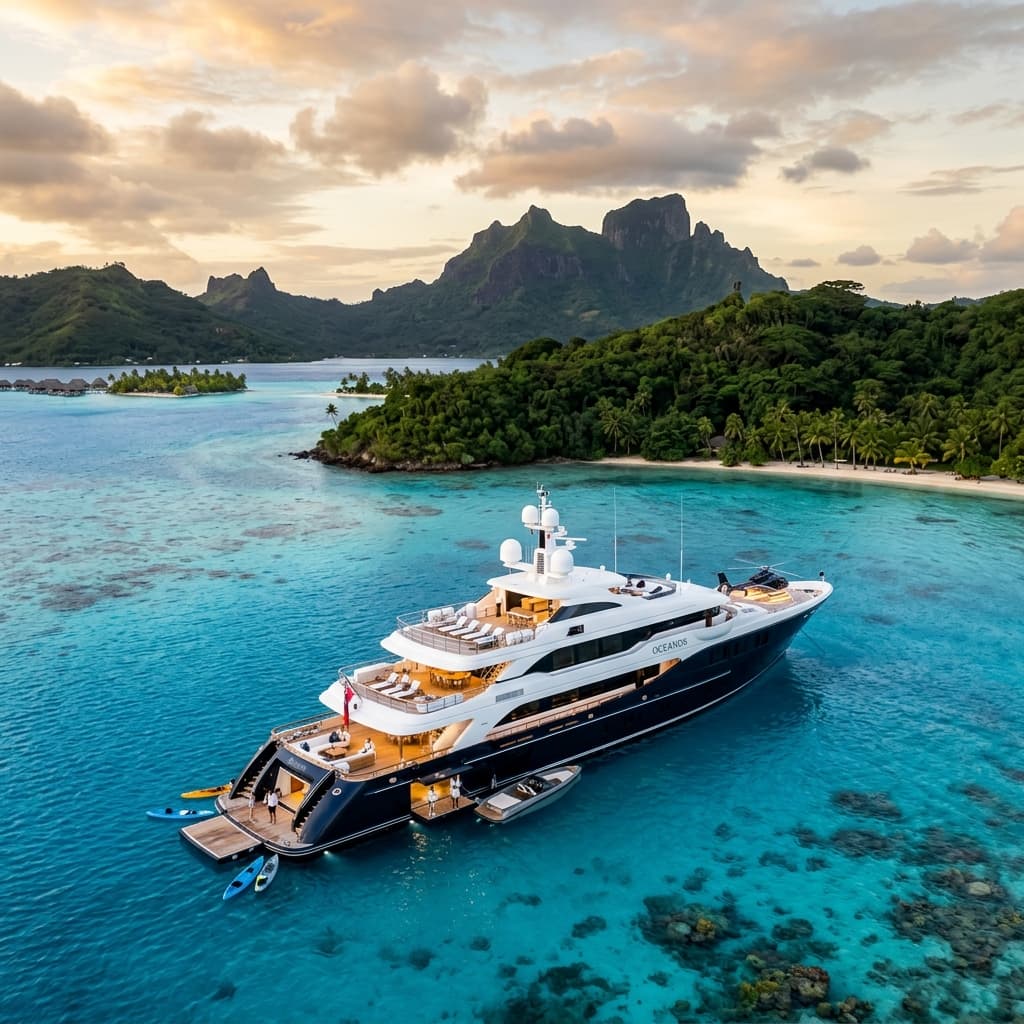
French Polynesia and Fiji. The ultimate escape to the edge of the world.
The South Pacific is one of the world's most spectacular cruising regions for a yacht charter, where vast stretches of open ocean connect tropical islands, untouched coastlines, and some of the most breathtaking marine environments on Earth. Covering the southern reaches of the Pacific Ocean, the region is renowned for its extraordinary natural beauty, remote island escapes, and relaxed way of life.
Unlike more developed yachting destinations, the South Pacific offers a true sense of exploration. From volcanic islands and coral atolls to lush rainforests and endless white-sand beaches, every destination feels secluded and unspoiled.
With warm tropical waters, vibrant marine ecosystems, and countless islands waiting to be discovered, a South Pacific yacht charter offers an unforgettable journey for those seeking privacy, adventure, and authentic island experiences.
Tell us your dates and group size, and we'll suggest yachts and a route to suit you.
Before you plan your yacht charter in the South Pacific, hear about SuperSailYachts from the people we work with.
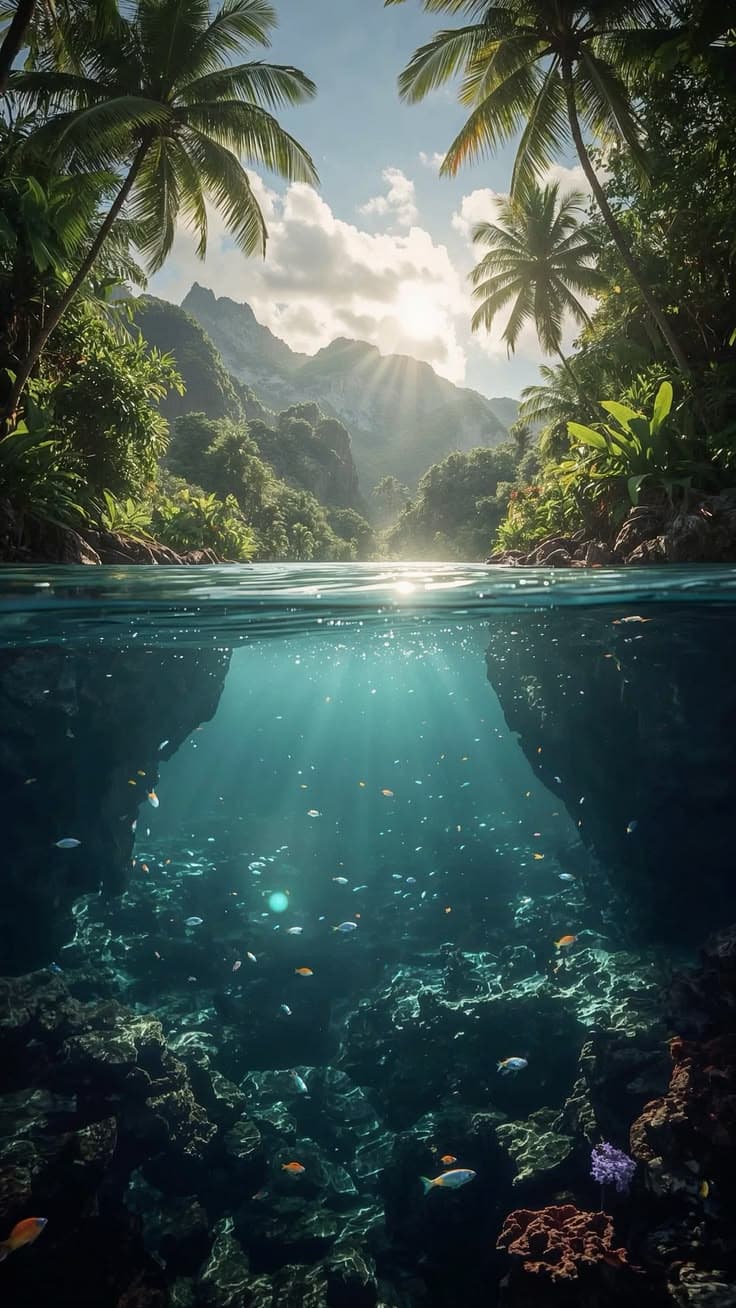
The South Pacific is made up of diverse island nations and coastal destinations, each offering its own scenery, culture, and sailing opportunities.
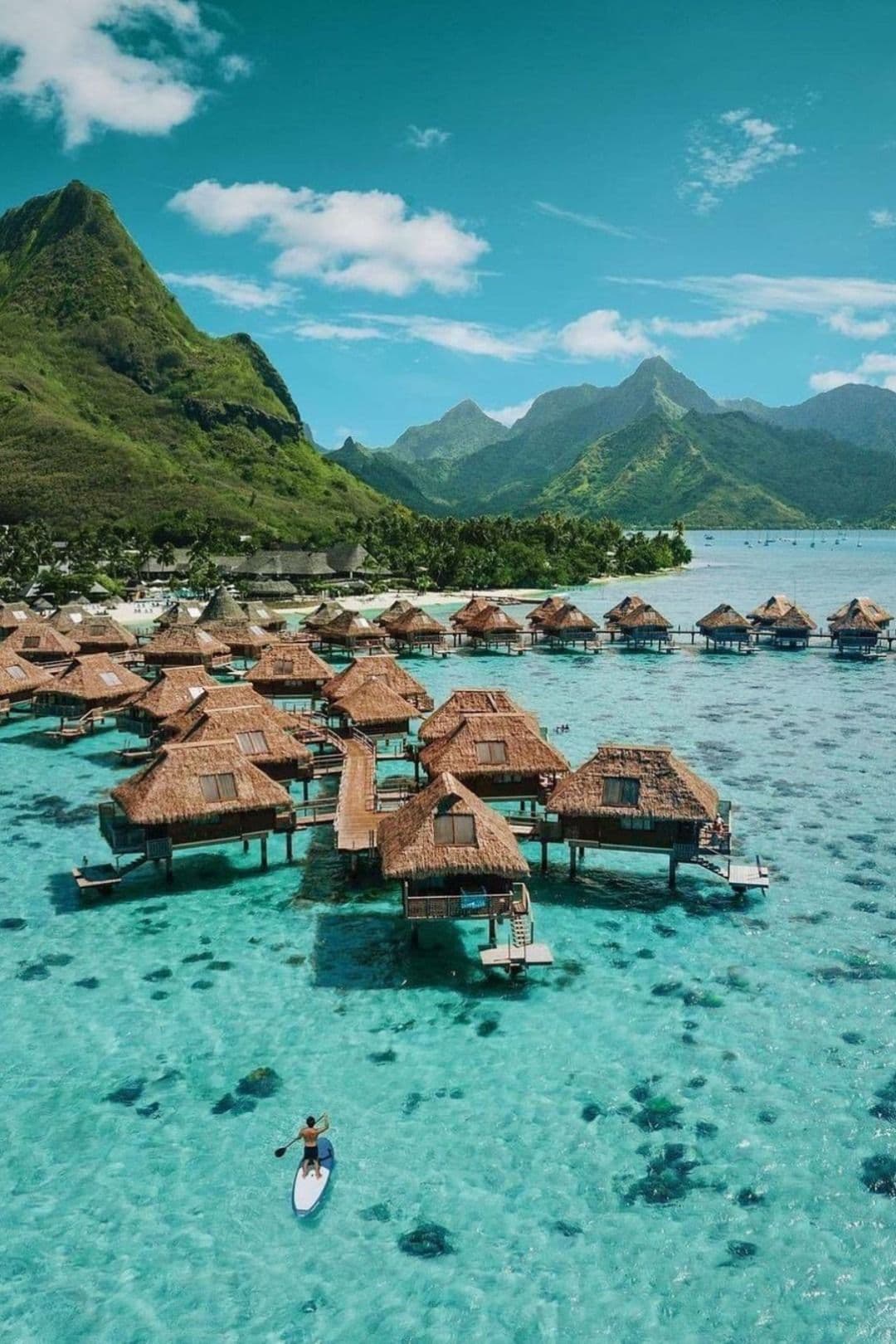
French Polynesia is famous for destinations such as Bora Bora, Tahiti, and Moorea, known for crystal-clear lagoons, volcanic peaks, and luxurious island resorts.
Fiji is home to more than 300 islands, offering colourful coral reefs, welcoming local culture, and beautiful tropical anchorages.
New Caledonia features one of the world's largest lagoon systems, combining French influences with pristine beaches and protected marine parks.
Vanuatu offers volcanic landscapes, untouched coastlines, and traditional island communities, while Tonga, Samoa, and the Cook Islands provide peaceful escapes surrounded by spectacular natural beauty.
Together, these destinations create one of the world's most diverse and rewarding cruising regions, where every island offers its own unique character.
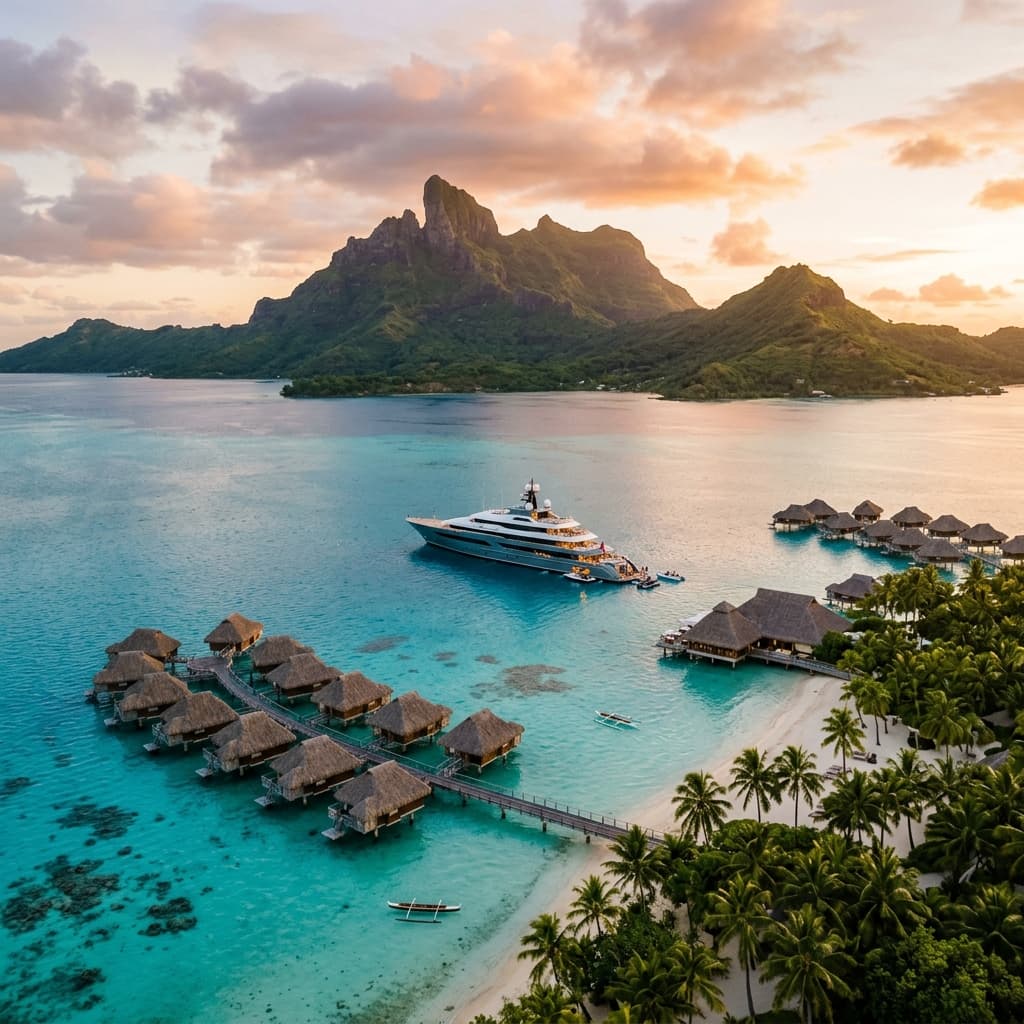
Crystal-clear lagoons, volcanic peaks, and luxurious island resorts across Bora Bora, Tahiti, and Moorea.
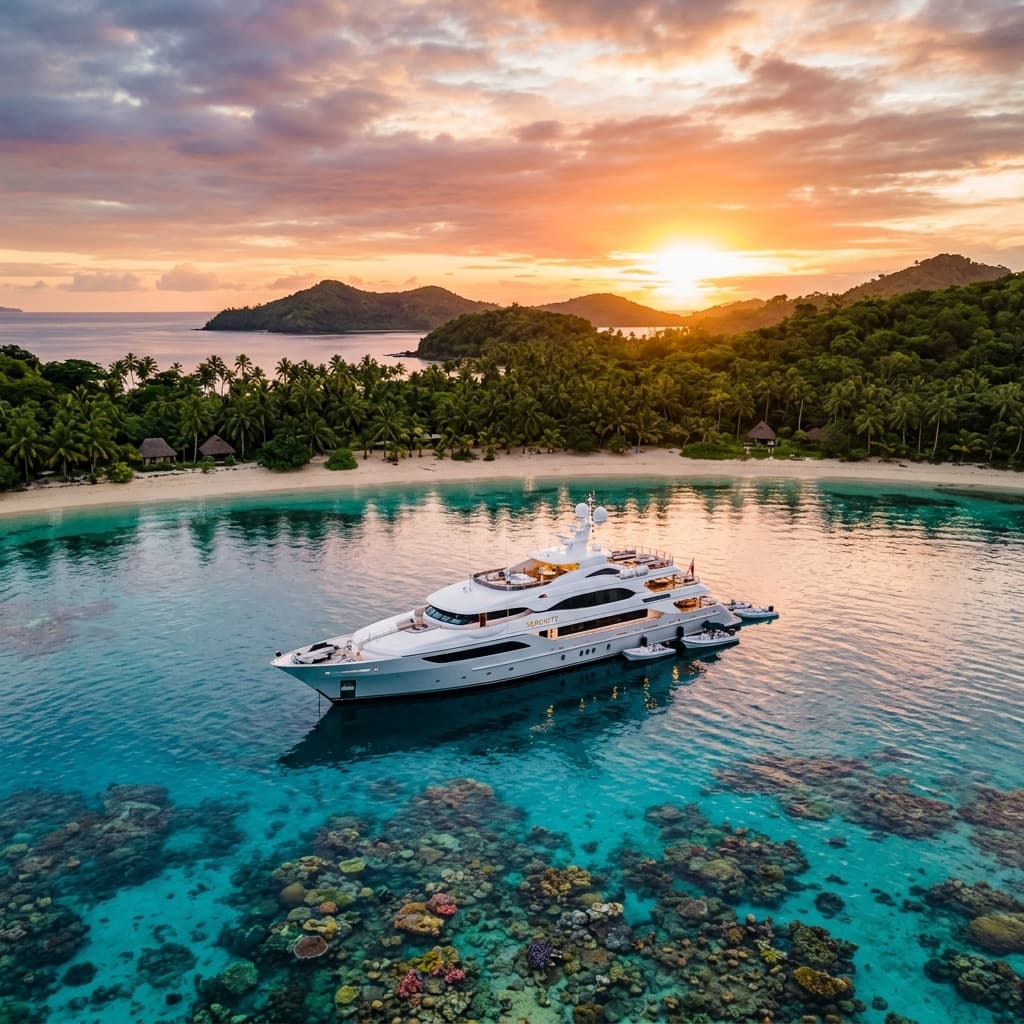
Over 300 islands offering colourful coral reefs, welcoming local culture, and beautiful tropical anchorages.
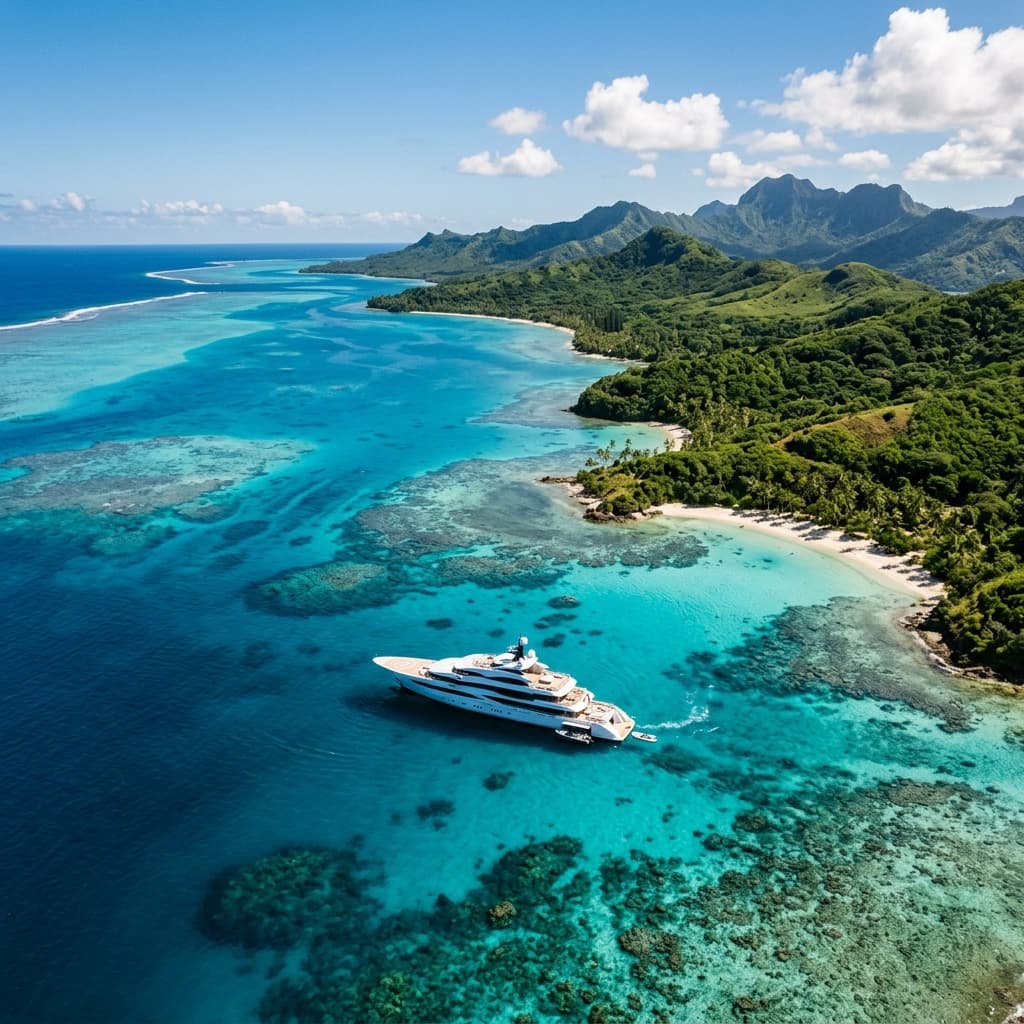
One of the world's largest lagoon systems, combining pristine beaches with protected marine parks.
Welcome aboard in Papeete. Flower lei ceremony. Cruise to your first turquoise lagoon as the sun sets over Moorea.
Anchor in the world-famous lagoon. Snorkel with rays and sharks. Beach barbecue on a private motu.
Visit a black pearl farm. Learn traditional Polynesian navigation. Evening dance performance aboard.
Swim with humpback whales in season. Final sunset at the most iconic viewpoint in the Pacific.
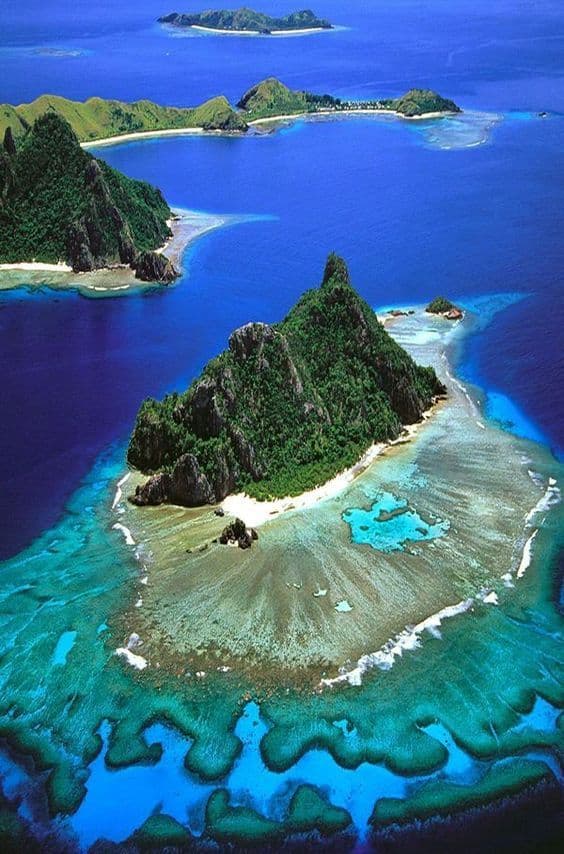
The South Pacific is defined by extraordinary natural beauty and unforgettable moments on the water. Spend your days swimming in turquoise lagoons, snorkeling through vibrant coral reefs, diving among tropical marine life, or discovering secluded beaches that remain untouched by mass tourism.
The region's calm waters and island-hopping opportunities make every journey feel relaxed and effortless. Beyond the coastline, visitors can experience Polynesian and Melanesian cultures, enjoy fresh island cuisine, explore traditional villages, and discover landscapes shaped by volcanoes, rainforests, and coral reefs.
Whether watching humpback whales during their migration, enjoying sunset dinners aboard your yacht, or simply anchoring beneath palm-lined shores, a South Pacific yacht charter offers experiences that combine luxury, nature, and adventure in equal measure.
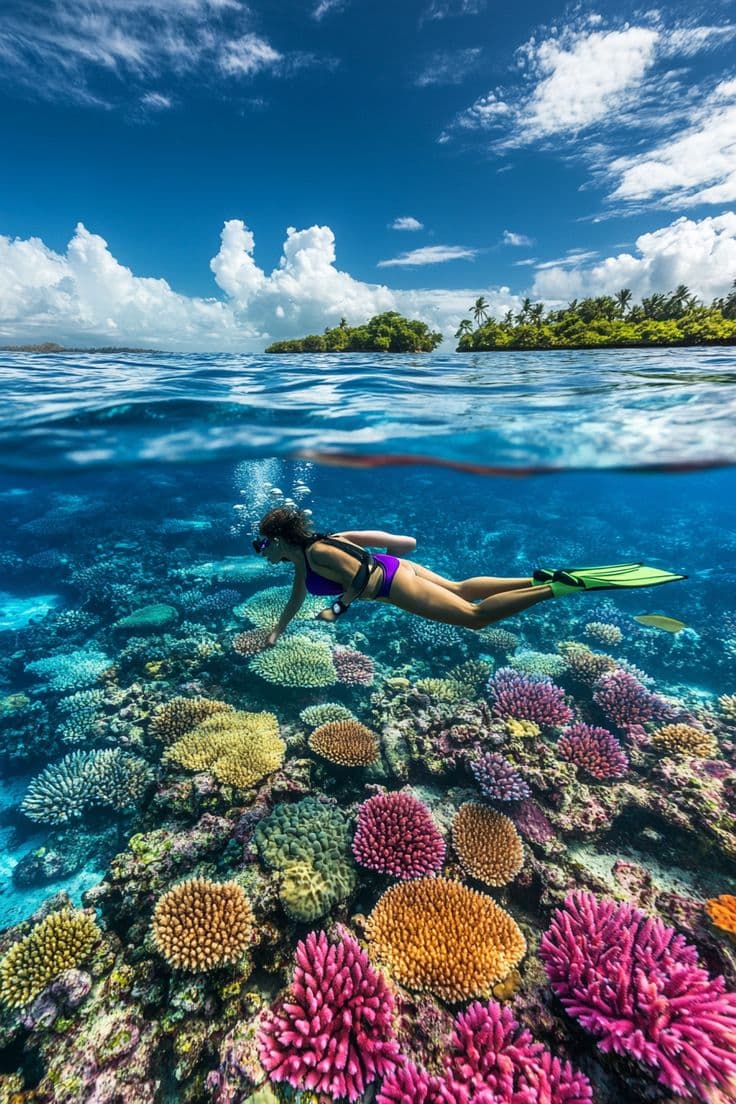
The South Pacific enjoys a warm tropical climate throughout the year, making it an outstanding destination for luxury yacht charters. The most popular cruising season is generally between May and October, when lower humidity, comfortable temperatures, and calm seas provide ideal conditions for sailing, diving, and island exploration.
November to April brings hotter, more humid weather and lush tropical scenery, with more rain depending on the destination. It is also the South Pacific cyclone season, when many larger yachts move to New Zealand or Australia; those that stay offer quieter anchorages, and the captain plans around the forecast.
With year-round warm waters, extraordinary island landscapes, and some of the world's richest marine ecosystems, the South Pacific remains one of the most rewarding regions for unforgettable yacht adventures.
The South Pacific spans thousands of kilometres of ocean, so a yacht charter usually focuses on one island group, flying between them rather than sailing. These are the main cruising grounds and what each is best for.
Tahiti, Moorea, Bora Bora and the atolls
French Polynesia has 118 islands and atolls in five archipelagos. Most charters cruise the Society Islands: Tahiti and Moorea, then the Leeward Islands of Huahine, Raiatea and Taha’a, which share one lagoon, and Bora Bora, about 230 km north-west of Tahiti. To the north-east, the Tuamotus are the largest chain of atolls in the world, and Rangiroa and Fakarava are famous for drift dives through their passes. The Marquesas, some 1,400 km from Tahiti, are rugged and remote, with no sheltering lagoons.
8-day Society Islands itineraryMamanuca and Yasawa groups, Taveuni, Lau
Fiji has about 330 islands, roughly a third of them inhabited. Yachts are usually based at Port Denarau near Nadi, close to the Mamanuca and Yasawa groups, a chain of reef-fringed islands with sheltered anchorages. Further east, Taveuni and the Somosomo Strait are known for the soft corals of the Rainbow Reef, and the Lau Group is one of the least visited corners of the Pacific.
The Vava’u islands
In northern Tonga, the Vava’u group is a compact cruising ground of steep, wooded islands around the sheltered harbour of Neiafu, with short hops between anchorages. From about July to October humpback whales arrive to calve, and Tonga is one of the few places where you can swim with them, with a licensed guide.
Nouméa, the lagoon and the Isle of Pines
New Caledonia’s lagoon is one of the largest in the world and a UNESCO World Heritage site. From Nouméa, yachts head south to the Isle of Pines, with its white sand and tall columnar pines, or explore the reefs and islets of the lagoon itself.
Efate, Espiritu Santo and Tanna
Vanuatu’s 83 islands stretch from Port Vila’s harbour on Efate north to Espiritu Santo, known for its blue holes and wreck diving, and south to Tanna, where Mount Yasur is one of the world’s most accessible active volcanoes.
Rarotonga and Aitutaki
Rarotonga is ringed by a reef and a shallow lagoon, and Aitutaki, a short flight to the north, has one of the most photographed lagoons in the Pacific: a turquoise triangle of sandbars and small islands.
Sydney, the Whitsundays, the Bay of Islands
When the tropics enter the cyclone season, many yachts move south. Sydney Harbour and the Whitsunday Islands, 74 islands inside the Great Barrier Reef, are Australia’s main charter grounds. In New Zealand, the Bay of Islands and the Hauraki Gulf near Auckland are at their best from December to March.
Sydney Harbour itineraryThe tropical islands share one rhythm: a drier season from May to October and a cyclone season from November to April, when many yachts head south to Australia or New Zealand.
| Where | Best months |
|---|---|
| French PolynesiaDrier, with steady south-east trade winds; humpback whales from about July to November | May to October |
| FijiThe cooler, drier season with south-east trade winds | May to October |
| TongaHumpback whales in Vava’u from about July to October | May to October |
| New Caledonia and VanuatuCooler and drier; whale watching in New Caledonia’s southern lagoon in July to September | May to October |
| Cook IslandsDrier, with lower humidity | May to October |
| Sydney and New ZealandThe southern summer, when many yachts leave the tropics | December to March |
International flights land at Papeete (Tahiti), Nadi (Fiji), Nouméa (New Caledonia), Port Vila (Vanuatu), Nuku’alofa (Tonga) and Rarotonga (Cook Islands), mostly via Los Angeles, Auckland, Sydney or Tokyo. Domestic flights, such as Air Tahiti’s 50-minute hop from Tahiti to Bora Bora, let you join the yacht further out.
A week suits one island group, such as the Leeward Society Islands or Fiji’s Mamanuca and Yasawa groups. Ten days to two weeks lets you add the Tuamotu atolls, an overnight passage from Tahiti.
The island groups are hundreds or thousands of kilometres apart. If you want to start away from the yacht’s base, a delivery fee covers repositioning her, so it usually pays to plan the route around her home waters.
Each country has its own customs, immigration and cruising rules. The captain and a local yacht agent arrange clearance and permits as you move between islands; we will tell you what your group needs before you travel.
Fine wines and some fresh produce are hard to find on remote islands, so send the crew your preferences early. Yachts usually stock up in Papeete, Nadi or Nouméa before heading out.
A catamaran’s shallow draft suits lagoons and atolls; a motor yacht covers the long distances faster. See our luxury catamaran charters for the multihull fleet.
The 4 crewed yachts we list for the region are 38 to 42.2 m long, with weekly rates from $123,790 to €210,000. Each yacht’s rate is shown with her listing below.
The charter rate pays for the yacht and her crew. On top of it, an advance provisioning allowance covers fuel, food, drinks, berths and the local agent who handles customs and permits; fuel and fresh produce cost more on remote islands, and the captain returns whatever is not spent. A delivery fee applies if you start or finish away from the yacht’s base, local taxes are added where they apply, and a gratuity for the crew is customary.
4 yachts for charter in and around the South Pacific
◆South Pacific / Australia / New South Wales

◆Pacific, Equador, Galapagos

◆South Pacific | Polynesia | Society Islands

◆Worldwide cruising – Caribbean, Mediterranean, Pacific & Indian Ocean
For the tropical islands, from May to October. This is the drier, cooler season, with steady south-east trade winds and the best conditions for sailing, diving and snorkelling. Australia’s Sydney Harbour and New Zealand are at their best in the southern summer, from December to March.
The South Pacific cyclone season runs from November to April. Yachts can still cruise, but the weather is less settled, hotter and more humid, and many larger yachts spend these months in New Zealand or Australia instead. If you travel then, the captain plans around the forecast and stays close to sheltered anchorages.
Fly into Papeete on Tahiti or Nadi in Fiji; both have international flights, mostly via Los Angeles, Auckland, Sydney or Tokyo, and Tahiti also has flights from Paris. The crew can meet you at the airport, and domestic flights, such as Air Tahiti’s 50-minute hop from Tahiti to Bora Bora, let you join the yacht further out.
A week suits one island group, such as the Leeward Society Islands of French Polynesia or Fiji’s Mamanuca and Yasawa groups. With ten days to two weeks you can add the Tuamotu atolls, which are an overnight passage from Tahiti.
In Tonga, yes. Humpback whales come to the Vava’u islands to calve from about July to October, and Tonga is one of the few places where you can swim with them, with a licensed local guide. French Polynesia and New Caledonia also have whale-watching seasons in the southern winter.
A catamaran’s shallow draft and stability suit lagoons and atolls, where it can anchor close to the beach. A motor yacht covers the long distances between islands faster and carries more water toys and tenders. Both work well; it depends on how far you want to travel in your week.
The advance provisioning allowance pays for fuel, food, drinks, berths and the fees of the local yacht agent who handles customs, immigration and cruising permits. Fuel and fresh provisions cost more on remote islands, so it is worth planning for that. The captain keeps the accounts and returns whatever is not spent.
No. The yachts on this page come with a professional captain and crew who handle the yacht, the route and the paperwork, and look after you on board.