
EXPLORE THE AMALFI COAST
The Amalfi Coast, Seen from the Water
Along the southern side of the Sorrento peninsula, the mountains fall so steeply into the sea that the towns had to be built upwards: Positano in a ravine of pastel houses, Amalfi around the steps of its cathedral, Ravello on a ledge high above them both. Across the water lie Capri, Ischia and Procida, with Naples and Vesuvius at the head of the bay. Many of the coast’s coves and grottoes are easiest to reach by boat, and a yacht moves between them in short hops, anchoring off a different village each night.
Your enquiry goes straight to our charter team on WhatsApp. See our privacy policy.
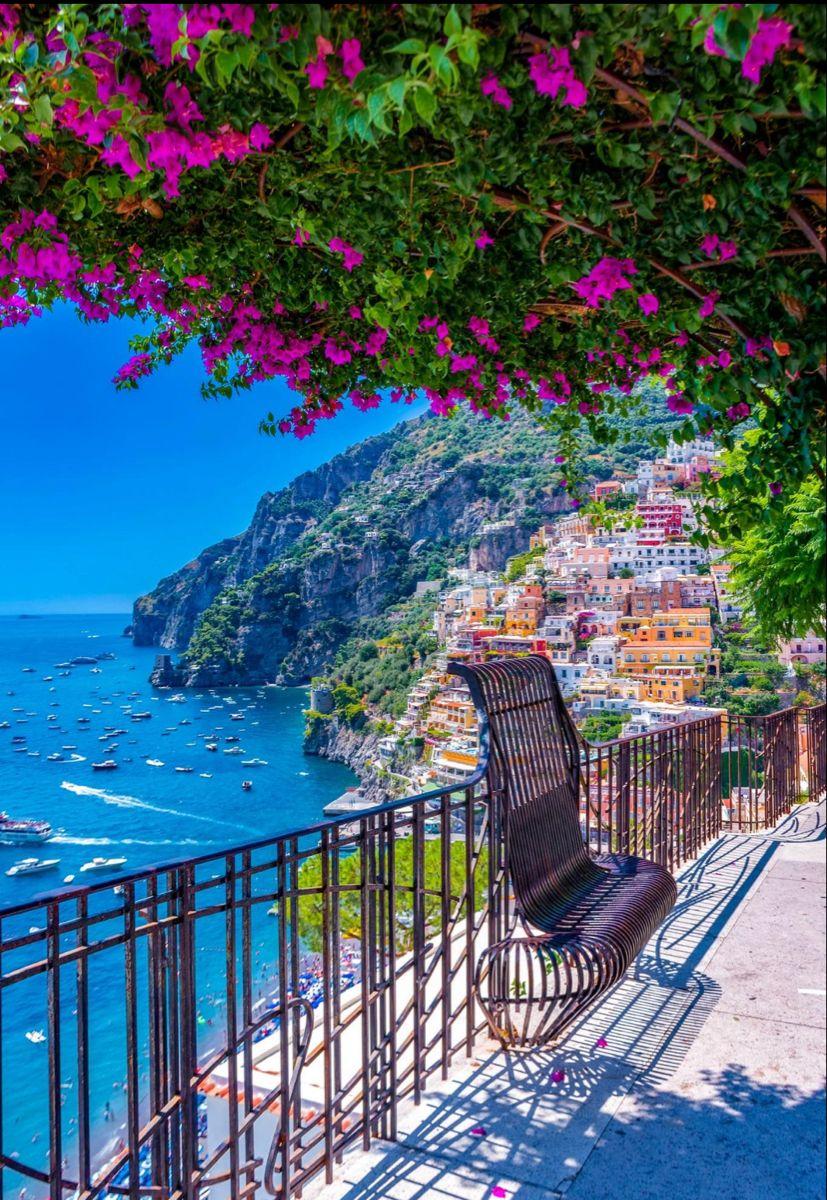
A Coast Built into the Cliffs
FOR CENTURIES, THE EASIEST WAY BETWEEN THE TOWNS OF THIS COAST WAS BY SEA.
The Amalfi Coast runs for about 50 kilometres along the Gulf of Salerno, from Positano in the west to Vietri sul Mare in the east. Behind it rise the Monti Lattari, the limestone spine of the Sorrento peninsula, whose slopes are so steep that vines, lemon groves and vegetable gardens grow on narrow terraces held up by dry-stone walls. UNESCO listed the whole stretch as a World Heritage Site in 1997, for the way its towns and terraces were fitted into such a dramatic landscape.
Until the coast road was cut into the cliffs in the 19th century, the towns were linked mostly by sea and by mule tracks over the hills. Amalfi made the most of it. From the 9th century it was a maritime republic trading with Constantinople, North Africa and the Levant, and its sailors were guided for centuries by the Tavole Amalfitane, the town’s code of maritime law. Local legend even credits an Amalfitan, Flavio Gioia, with perfecting the compass, and his statue stands on the waterfront.
Thirteen towns share the coast today, from fishing villages such as Cetara to Ravello, which looks down on the sea from about 350 metres. Many of their churches are crowned with domes of glazed majolica tiles, a craft still practised in Vietri sul Mare, and their lanes are stepped more often than paved, so on foot this is a coast of staircases.
Across the water, the Bay of Naples adds a different world: a great city, an active volcano and three islands, each with its own character. Most charters combine the two, starting in Naples and spending a few days among the islands before turning south around the tip of the peninsula to the villages on the cliffs.
Six Stops Between Naples and Amalfi
From Naples and its islands to Sorrento, Positano and Amalfi, these six places shape a week on the water.

Amalfi, Ravello and the Eastern Villages

Naples and Vesuvius

Ischia and Procida

Capri

Sorrento and Punta Campanella
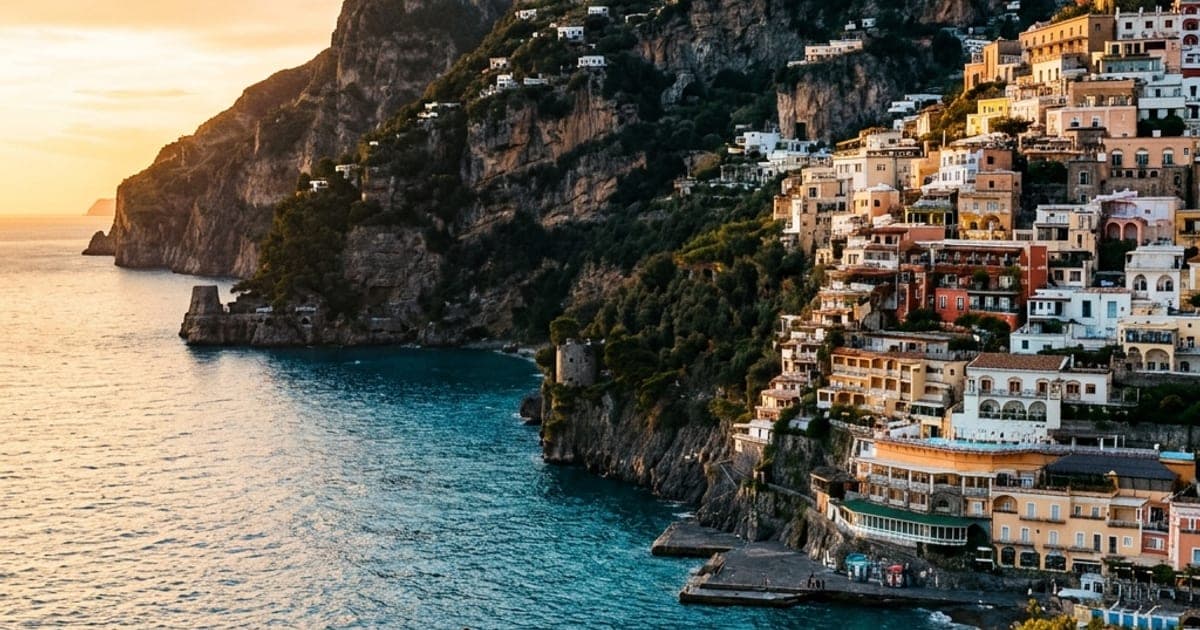
Positano and Praiano
Amalfi, Ravello and the Eastern Villages
Naples and Vesuvius
Ischia and Procida


What to Do Along the Way
Walk the Path of the Gods
The Sentiero degli Dei follows a high ledge of the Monti Lattari from Bomerano, a hamlet of Agerola, to Nocelle above Positano, with views along the whole coast and out to Capri. It takes about three hours at a steady pace, mostly level or downhill, and from Nocelle a long stairway leads down to Positano, where the tender can collect you. In summer, start early, as there is little shade, and take water and good shoes. A taxi or the local bus from Amalfi reaches the start.
Swim into the Grottoes
The sea has carved caves all along this limestone coast. The Grotta dello Smeraldo, near Conca dei Marini, was found by a local fisherman in 1932 and is visited by rowing boat: light entering under the water turns it emerald green, and a ceramic nativity scene lies on its floor, placed there in the 1950s. Around Capri, the tender can take you into the Green and White Grottoes and through the arch of the middle Faraglione, and the crew will know when the queue at the Blue Grotto is shortest.
Hear a Concert in Ravello
Ravello has been a town of music since Wagner’s visit. Each summer the Ravello Festival puts orchestras, soloists and chamber groups on a stage built out over the cliff in the gardens of Villa Rufolo, with the coast falling away behind the musicians, and some years it adds a concert at dawn for the early risers. Book seats when you book the yacht, then take a taxi up from Amalfi, about 20 minutes away, and come back down to the yacht for a late dinner on deck.
Spend a Day at Pompeii and Herculaneum
Two Roman towns lie under the slopes of Vesuvius, buried by the eruption of AD 79 and uncovered from the 18th century onwards. Pompeii is vast, with streets, houses, baths and an amphitheatre, and deserves at least half a day with a guide. Herculaneum is smaller and buried deeper, so more of it survives: carbonised wood, upper floors and the boat sheds on the old shore where the remains of some 300 people who sought shelter there were found. Both are a short drive from Naples, Sorrento or Salerno.
Take the Tender to Lunch
Some of the coast’s best lunches are at restaurants reached from the sea. Da Adolfo, in the cove of Laurito east of Positano, sends its own boat, with a red wooden fish on the mast, and also welcomes tenders. Lo Scoglio, on a deck over the water at Marina del Cantone, has been a lunch stop for guests arriving by boat since 1958, and La Fontelina sits on the rocks at the foot of the Faraglioni. Our Italy map has these and the other places we recommend, with how to reach each one from the yacht.


What to Eat and Drink
Eat Pizza in Naples
Neapolitan pizza is simple and fast: a soft dough, a few toppings and about a minute and a half in a wood-fired oven at around 450°C, which leaves the edge of the crust puffed and blistered. Order a margherita, or a marinara with garlic and oregano, eat it with a knife and fork as the Neapolitans do, and look out for pizza fritta, folded and deep-fried, from the street stalls. In 2017 UNESCO recognised the art of the Neapolitan pizzaiuolo as part of the world’s intangible cultural heritage.
Taste the Lemons of Amalfi
The sfusato amalfitano, a long, pointed lemon with a thick, fragrant skin, grows on terraces along the coast under pergolas of chestnut poles. It has its own protected name, Limone Costa d’Amalfi, and it turns up everywhere: grated over pasta, in lemon risotto, as leaves wrapped round grilled mozzarella, and in delizia al limone, a small dome of sponge filled and covered with lemon cream. Limoncello, the lemon liqueur, comes ice-cold at the end of a meal.
Order Spaghetti alla Nerano
Named after the village near the tip of the peninsula, spaghetti alla Nerano is made with courgettes fried until soft and sweet, then tossed with the pasta, basil and provolone del Monaco, a cheese from the Monti Lattari, until the sauce turns creamy. Along the coast, look also for scialatielli, a thick, short fresh pasta served with seafood, and for spaghetti with clams wherever the boats land them.
Try the Colatura of Cetara
In Cetara, anchovies caught in spring are layered with salt in chestnut barrels and left for months, and the amber liquid that drips from them is colatura di alici, a descendant of garum, the fish sauce of ancient Rome. A few drops dress spaghetti with garlic, oil and parsley, a dish traditionally eaten on Christmas Eve. The village is also known for its tuna, caught by its own fleet and preserved in oil.
Have Lunch the Capri Way
Capri gave its name to the insalata caprese: slices of mozzarella and tomato with basil and olive oil, in the colours of the Italian flag. In Campania the mozzarella is often made from buffalo milk, and mozzarella di bufala campana is a protected product, best eaten the day it is made. The island also gave its name to torta caprese, a flourless chocolate and almond cake, and to ravioli capresi, filled with soft caciotta cheese and marjoram.
Finish with Pastry and Campanian Wine
The sfogliatella, a shell of crisp, many-layered pastry filled with ricotta and semolina, is the pastry of Naples, and its larger, cream-filled cousin, the Santa Rosa, was first made by the nuns of the convent of Santa Rosa at Conca dei Marini. With dinner, try the coast’s own Costa d’Amalfi wines, from terraced vineyards at Furore, Ravello and Tramonti, or whites from inland Campania such as Falanghina, Fiano di Avellino and Greco di Tufo.
The Amalfi Coast Through the Sailing Year
Yachts cruise the Amalfi Coast and the Bay of Naples from May to October, and the summer months are usually dry and settled. On fine days a sea breeze fills in from the south-west in the afternoon and dies away in the evening. The coast faces south, so the anchorages off Positano and Amalfi feel the swell when the scirocco or the libeccio blows from the south or south-west; the captain then moves to the sheltered northern side of the peninsula, off Sorrento, or into the lee of the islands.
Best for walks, gardens and quiet villages
Spring is the season for walking. The Path of the Gods is green and cool, Ravello’s gardens are in flower and Positano’s lanes are still quiet. The sea is cool, around 16°C in April and 18–19°C by late May, so swimming is for the brave. Many hotels and restaurants on the coast open around Easter, and on 14 May Capri celebrates its patron saint, San Costanzo.
APRIL AND MAY
Best for long days and warm water
June brings settled weather and long evenings, and the sea warms to 22–23°C. The coast is busy but not yet crowded, with space at anchor off Positano and in the coves of Capri. On 27 June, Amalfi celebrates its patron, Sant’Andrea, and the bearers carry his statue at a run up the cathedral steps, while the Ravello Festival opens its summer programme.
JUNE
Best for the warmest sea and the liveliest evenings
High summer is hot and dry, and the sea reaches 25–27°C. It is also the busiest time on the coast: Italians take their holidays in August, and on 15 August, Ferragosto, the beaches are full. Positano marks the Assumption with a procession, a re-enactment of a Saracen raid on the beach and fireworks over the bay. Book the yacht early, and expect a lively crowd in Capri’s Piazzetta every evening.
JULY AND AUGUST
Best for warm swims and the grape harvest
Once the August crowds leave, September is many guests’ favourite month. The sea is still around 25°C, the light softens, and the grape harvest begins on the terraces of Furore, Ravello and Tramonti. Short late-summer thunderstorms grow more likely as the month goes on, and the captain plans the route around them.
SEPTEMBER
Best for mild days and a quieter coast
October is often warm and clear, with the sea around 21–22°C, and the villages settle back into their own rhythm. Rain becomes more frequent, and some hotels, restaurants and beach clubs close towards the end of the month, so ask us which yachts are still cruising and keep a day or two of flexibility in the plan.
OCTOBER
walks, gardens and quiet villages
long days and warm water
the warmest sea and the liveliest evenings
warm swims and the grape harvest
mild days and a quieter coast
PLAN YOUR CHARTER
More on the Amalfi Coast by Yacht
- Amalfi Coast Yacht CharterCruising areas, routes, seasons and rates, with the yachts we list on the coast and in Naples.
- A Week from Naples, Day by DayOur seven-day route to Procida, Ischia, Capri, Positano, Amalfi and Sorrento.
- Where to Eat and DrinkOur pick of restaurants, bars, cafés and beach clubs in Naples, Capri and on the Amalfi Coast.
- Yachts on the Amalfi CoastEvery crewed yacht we offer on the Amalfi Coast and in the Bay of Naples.
Plan Your Week on the Amalfi Coast
Most weeks here start in Naples and split their time between the islands and the cliffs: a night or two off Ischia and Procida, a day around Capri, then round the tip of the peninsula to Positano, Amalfi and Ravello. A one-way charter can finish in Salerno, or carry on south along the Cilento coast.
Some guests want a new grotto for every swim and lunch at a different jetty each day. Others want to walk the Path of the Gods, hear a concert in Ravello and see Pompeii with a guide. The coast is compact enough to give you both in one week.
Tell us your dates, your group and what you would most like to see, and we will suggest yachts available on the Amalfi Coast and a route planned around the season and the wind.